
Redwood City, CA · Garage Door Service
What That Noise Is Actually Telling You
Redwood City homes mostly date to 1966, and that original hardware talks before it fails. Here's how to tell a noise that matters from one that doesn't.
- Repairs & new doors
- Springs & openers
- Serving 4 nearby communities
Checking It Yourself
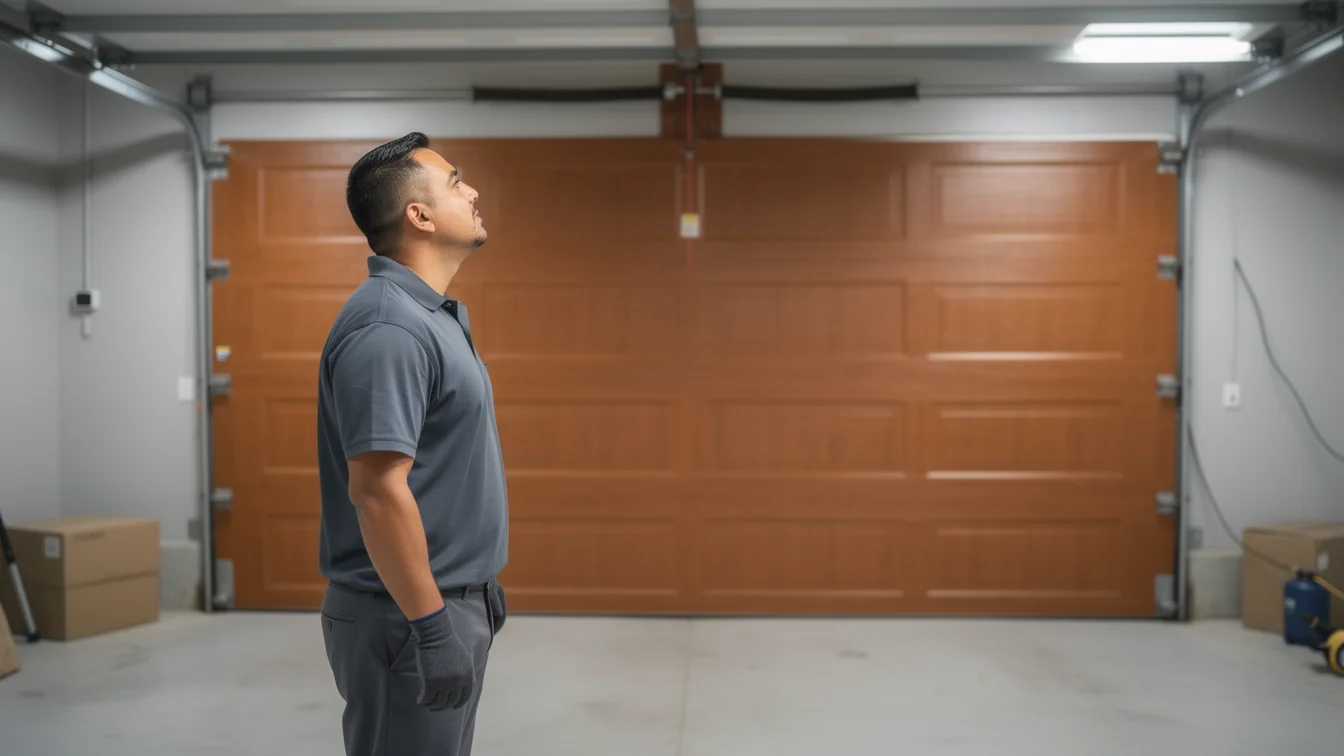
Most houses across Redwood City and the surrounding 41 named areas went up between 1947 and 1988, with the bulk of that stock dating to the 1960s and 70s. That matters here because a lot of those doors are still running original torsion hardware, or a first-generation replacement from whoever owned the house in the 80s. A sharp metallic pop when the door starts moving is usually a spring losing tension, not the opener. A rhythmic thunk every few seconds as the door travels is almost always a bent track section or a roller that's worn past its bearing. Grinding that gets louder as the door closes points to a track out of alignment, which is common once shims and brackets have sat through a few decades of seasonal movement. Put a hand on the track while someone else runs the door, if you feel more vibration than the sound alone suggests, the hardware is loose, not just noisy. Don't put your fingers near the spring itself. If the door shudders instead of sliding, stop running it until someone looks at it.
What It Costs
We don't post a number here because the fix depends entirely on what's actually making the sound, and on hardware this old that varies house to house even on the same block. A loose roller bracket is a different job from a torsion spring that's reached the end of its cycle count, and a door original to a 1966-built house often needs parts a newer door wouldn't. What we can tell you: diagnosing the noise is the first step, and we'll tell you plainly if a repair isn't worth it versus replacing an aging door outright. We won't quote a price over the phone based on a description alone, because guessing wrong either way costs you more than the call.
What Is Going On
On a door built or installed during the 1960s-70s wave that makes up most of this area's housing stock, noise usually comes from one of three places: the spring system, the rollers and track, or the opener's drive mechanism. Original torsion springs were sized for the door weight at install, and decades of cycles wear them toward failure gradually, so the sound changes before the spring actually breaks. Steel rollers, common on older installs before nylon became standard, get louder as their bearings dry out, there's no fixing that, only replacing them. Track noise is almost always a mounting issue, brackets loosen as a house settles over fifty-plus years, not a defect in the track itself. None of this is dramatic, which is exactly why people ignore it until the day the door won't move at all.
How Local Conditions Play In
Redwood City sits in a mild temperate band, no deep freeze, no extreme heat swings, so the metal fatigue and lubricant breakdown you'd expect from harsh winters or desert summers isn't really the driver here. What is the driver is age: a door on a house with a 1966 median build year has had a long, steady run of ordinary use, and ordinary use eventually wears hardware down regardless of weather. Moisture from coastal air can still dry out factory lubricant on rollers and hinges faster than people expect, even without storms or freeze-thaw cycles, so the noise shows up as a maintenance issue rather than a weather-damage one. That's actually good news: a quiet door here usually means it's been lubricated reasonably well, not that it's new.
Frequently asked questions
My door makes a loud bang once when it starts moving. Is that the spring?
Usually, yes. A single sharp pop at the start of travel is the classic sign of a torsion spring losing or finishing its tension. On a door with original hardware from a 1960s or 70s build, that spring has had a long run already. Stop using the opener and get it looked at, a spring under the wrong tension is the most common point of sudden, complete failure.
Is a noisy door dangerous or just annoying?
Depends what's making the noise. A dry hinge squeak is cosmetic. A grinding track or a spring starting to go is a safety issue, because both can lead to the door dropping or coming off its track mid-cycle. If you're not sure which you're hearing, treat it as the serious kind until someone tells you otherwise.
Why does my neighbor's door from the same era sound different than mine?
Even on houses built in the same stretch of the 1960s-70s, doors have been serviced, replaced, or neglected differently over fifty-plus years. One owner replaces rollers on schedule, another doesn't touch the door until it stops working. Same house era, completely different hardware condition.
Related garage door services in Redwood City
More garage door guides
Book garage door service in Redwood City
Call now or request a quote - tell us what the door is doing and where you are.