
Redwood City, CA · Garage Door Service
Why Your Garage Door Sensors Keep Drifting Out of Alignment
Redwood City homes built 1947-1988 often have sensor brackets that have shifted over decades. Here's how to check alignment and what's really going on.
- Repairs & new doors
- Springs & openers
- Serving 4 nearby communities
Checking It Yourself
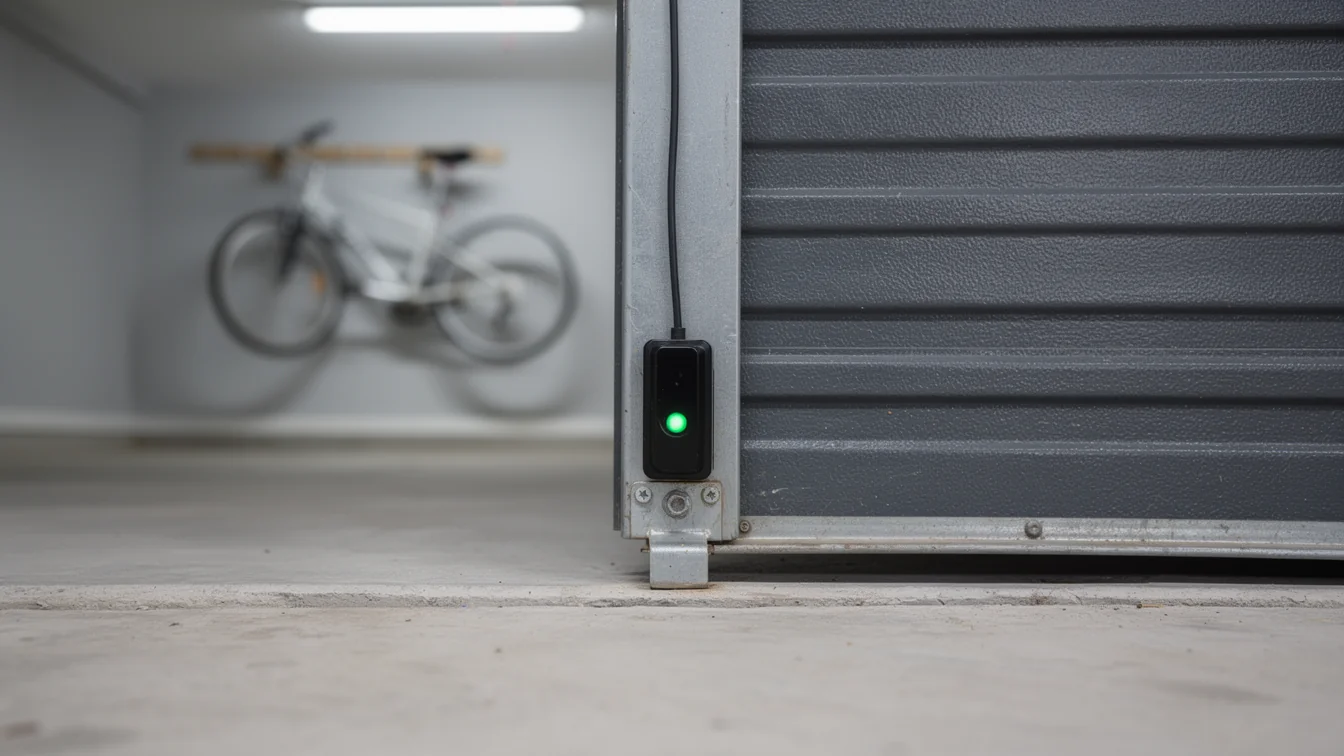
Walk out to the door and look at the two small boxes mounted a few inches off the slab on either side of the track, one with a steady LED and one that blinks when the beam is blocked. If the steady light is flickering or off, the beam isn't lined up. Most of the housing stock around Redwood City went up between 1947 and 1988, median year 1966, which means a lot of these brackets were bolted onto original wood jambs or early steel tracks decades before anyone added an automatic opener to the door. Loosen the wingnut on each bracket, nudge the sensor by hand until both LEDs read solid, and retighten. Don't force it - the bracket metal on doors this old is often thinner than what's sold today, and it strips easily. Check that nothing is propped in front of either eye, including a storage bin or a bike leaned against the frame, since that's the single most common cause of a "phantom" misalignment call. If the lights are solid and the door still reverses, the problem isn't the sensors - it's upstream of them, and that's worth a call rather than more guessing.
What It Costs
We don't have a flat number to hand you here, and we're not going to invent one. Sensor adjustment is usually a short job, but what it actually runs depends on whether the bracket itself has rusted through, whether the wiring run needs replacing, or whether the opener's logic board is the real culprit. A lot of the stock across the service area dates to the 1960s and 70s, and sensor wiring on doors that old was sometimes added after the fact, spliced into whatever conduit was handy at the time - that kind of patch job takes longer to sort than a clean factory install. The honest answer is we need to look at the bracket and the run before quoting anything. If your opener is original to a house built in the 1950s or 60s and the sensors were a later retrofit, replacing the whole low-voltage run is often simpler than chasing one bad splice, and we'll tell you that straight rather than bill you for an hour of troubleshooting first.
What Is Going On
A safety sensor doesn't need much to go wrong - a beam off by a few degrees will read as blocked. In a lot of Redwood City's older housing, built mostly between 1947 and 1988, the slab the track sits on has had fifty-plus years to settle, even if it's settled slowly and by a fraction of an inch. That's enough to tip a bracket that was dead level when it went in. Add to that the fact that across the 41 named areas in this part of the Peninsula, most garages are still running openers and sensor hardware from the 1960s and 70s retrofit era, when brackets were often held with a single screw rather than today's two-point mount. Vibration from the door cycling, normal foot traffic bumping the track, or someone leaning a ladder against the frame is usually enough to walk that single screw loose over time. It's rarely the sensor itself failing - the photoelectric eyes are simple and tend to outlast everything else on the door. It's almost always the mount.
How Local Conditions Play In
Redwood City sits in a mild temperate band, so you're not dealing with the freeze-thaw cycling that heaves slabs and racks brackets out of true in colder parts of the country. That's a real advantage - sensor drift here tends to be slow and mechanical rather than sudden and weather-driven. But mild doesn't mean static. Houses built in the 1947-1988 window have had decades for the slab to settle and for wood-frame garages to shift slightly with the seasons, even in a climate this stable. With 166,417 owner-occupied houses across the service area, a lot of them built in that same postwar-through-1980s stretch, the pattern we see most often isn't storm damage or ice - it's a bracket that's crept out of alignment a sixteenth of an inch at a time over forty years. If you're near North Fair Oaks or San Carlos, both a few miles off and sitting on similar-age housing stock, expect the same slow drift rather than anything dramatic.
Frequently asked questions
Why does my garage door reverse for no reason?
Nine times out of ten it's a sensor that's drifted slightly out of alignment, not actually broken. Check that both LEDs on the sensor eyes are solid and not flickering, and make sure nothing - a bin, a bike, a shadow from bright sun - is sitting in the beam path. If both read solid and it still reverses, the issue is likely in the opener logic, not the sensors.
How often should sensors need adjusting in a house this old?
There's no fixed schedule, but on housing from the 1947-1988 era around here, we see brackets that have crept out of true over years of slab settling and door vibration rather than failing outright. If you're nudging the same bracket every few months, the mount itself is likely worn and due for replacement rather than another adjustment.
Can I just disconnect the sensors if they keep causing problems?
We'd advise against it. The sensors are a safety feature, not a nuisance to route around, and disabling them removes the one thing stopping the door from closing on something in its path. If they're drifting constantly, the fix is a better mount or a wiring check, not bypassing them.
Related garage door services in Redwood City
More garage door guides
Book garage door service in Redwood City
Call now or request a quote - tell us what the door is doing and where you are.