
Redwood City, CA · Garage Door Service
Why a Garage Door Goes Off Track
Redwood City homes mostly date to 1966, with original track hardware and brackets still in place. Here's what actually knocks a door off its track and what it takes to fix.
- Repairs & new doors
- Springs & openers
- Serving 4 nearby communities
Checking It Yourself
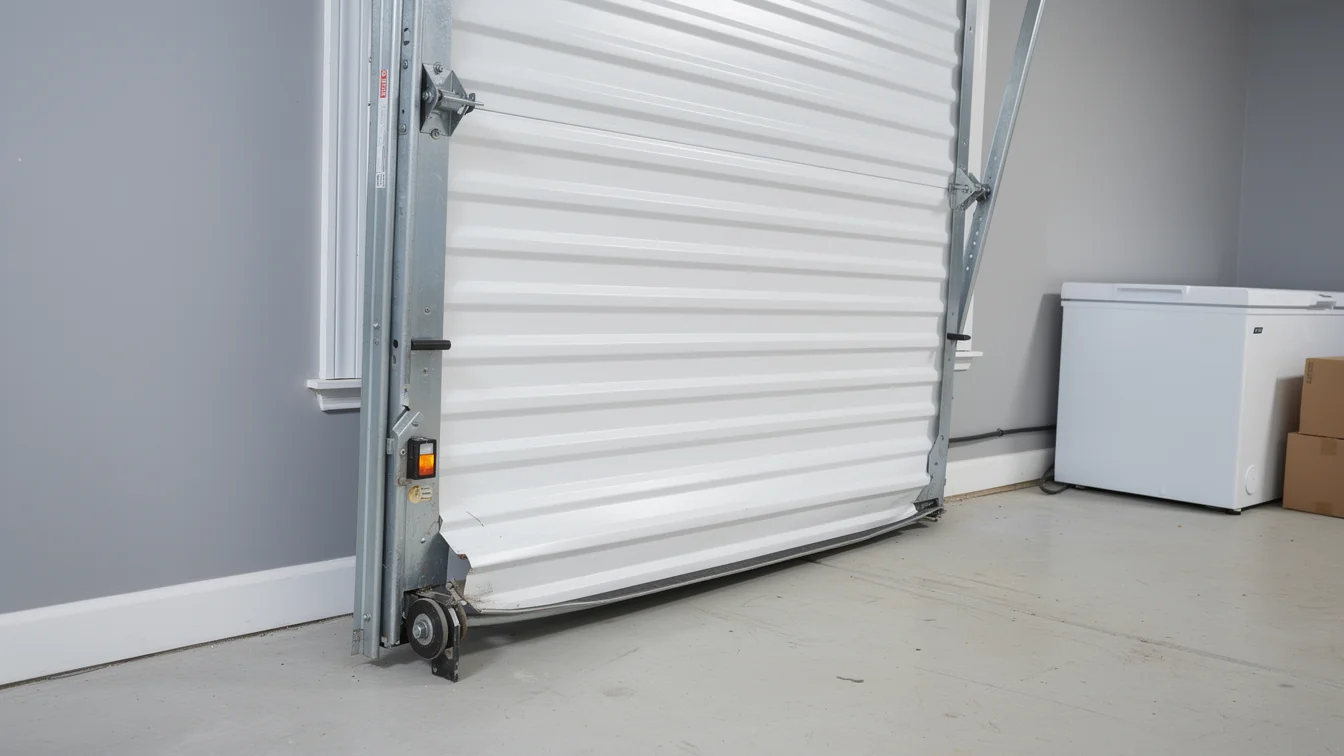
Before you call anyone, look at the track itself. Stand to the side and run the door up and down by hand with the opener disconnected. Watch where the rollers sit in the track - a gap between the roller and the rail, or a track that bows outward near a bracket, tells you most of what you need to know.
Check the brackets that hold the track to the framing. In a lot of Redwood City garages, those brackets were set into framing that's been there since the 1960s or earlier, and over decades the wood around the lag screws loosens. A bracket that wiggles when you push on it is a common find.
Also look at the cable on each side near the bottom bracket. If one side is slack while the other is taut, the door has been pulling unevenly, which walks the rollers right out of the track over time. Don't force the door past the point where it binds - that's how a track gets bent worse, or a roller breaks off and leaves the door hanging on one side.
What It Costs
We're not going to put a number here that doesn't hold up once we're standing in front of the actual door. A door that's hopped the track because one bracket pulled loose is a different job than a bent track from an impact, and a different job again if the rollers themselves are shot from age.
What we can tell you is what drives the cost up or down: whether the track needs to be straightened or replaced outright, how many brackets need to be reset into the framing, and whether the rollers and hinges need to come out with it. On a lot of the older housing stock in this area, once we're into one worn component we usually find two or three more nearby that are close behind it.
If the track is only mildly bent and the brackets are solid, that's a short visit. If the framing behind the bracket has deteriorated enough that it won't hold a lag screw anymore, that's more work, and it's honest to say so before we start rather than after.
What Is Going On
A door doesn't jump the track on its own - something upstream fails first. The most common cause we see is a bracket working loose from the jamb, which lets the track flex sideways under load until a roller pops free. The second most common is a broken or badly frayed cable, which lets one side of the door drop while the other side is still held, twisting the door until it binds against the track.
Worn rollers play a role too. Steel rollers from an older install wear down at the edges over the years, and once the roller no longer fits the rail cleanly, it takes less and less to knock it loose - a slightly heavy gust through the opening, a car bumping the door, even just normal daily cycling.
Less often, the track itself has been struck - a bumper, a bike, a ladder leaned against it - and bent enough that the rollers can't track true anymore. That one's usually obvious once you look, bent metal doesn't hide.
How Local Conditions Play In
Redwood City sits in a mild temperate band, so we're not dealing with the freeze-thaw cycles that heave slabs and twist track mounts in colder parts of the country. That's one thing working in homeowners' favor here - the metal isn't expanding and contracting hard enough, season to season, to loosen hardware on its own.
What does matter here is age. Housing across this service area mostly went up between 1947 and 1988, with the typical house dating to around 1966, and that pattern repeats across the 41 named areas in the region, from Centennial and Redwood Shores to Farm Hills and Hillsdale. A door hung on brackets from a 1966-built garage has had six decades of wood movement, settling, and prior repairs to work loose, track hardware included.
With 166,417 owner-occupied houses across the service area, a lot of them built in that same stretch, bent track and pulled brackets are some of the most common calls we get - not because of weather, but because the hardware is simply old.
Frequently asked questions
Why did my garage door suddenly come off the track with no warning?
Usually it wasn't sudden - a bracket had been working loose or a cable fraying for weeks or months before the day it finally gave. The door runs fine right up until the one roller that's been riding on the edge finally slips free.
Can I push the door back onto the track myself?
You can sometimes reseat a roller by hand if the track isn't bent and the spring tension is released, but if a cable's broken or the door is under spring tension, forcing it back can snap something and hurt someone. If you're not sure which situation you're in, stop and call.
Is this common in older Redwood City homes?
Yes. Most houses in this area date to the 1960s stock built between 1947 and 1988, and track brackets anchored into framing that age loosen with normal wear. It's one of the more frequent calls we get across the neighborhoods here.
Does Redwood City's weather cause this?
Not really. The mild temperate climate here means we don't get the freeze-thaw cycling that stresses track mounts elsewhere. When a door goes off track here, it's almost always age, wear, or an impact - not weather.
Related garage door services in Redwood City
More garage door guides
Book garage door service in Redwood City
Call now or request a quote - tell us what the door is doing and where you are.