Redwood City, CA · Garage Door Service
What a Technician Checks First in Redwood City
A Redwood City technician's first look: 1960s torsion hardware, mild-climate wear, and what actually drives repair versus replacement cost here.
- Repairs & new doors
- Springs & openers
- Serving 4 nearby communities
Checking It Yourself
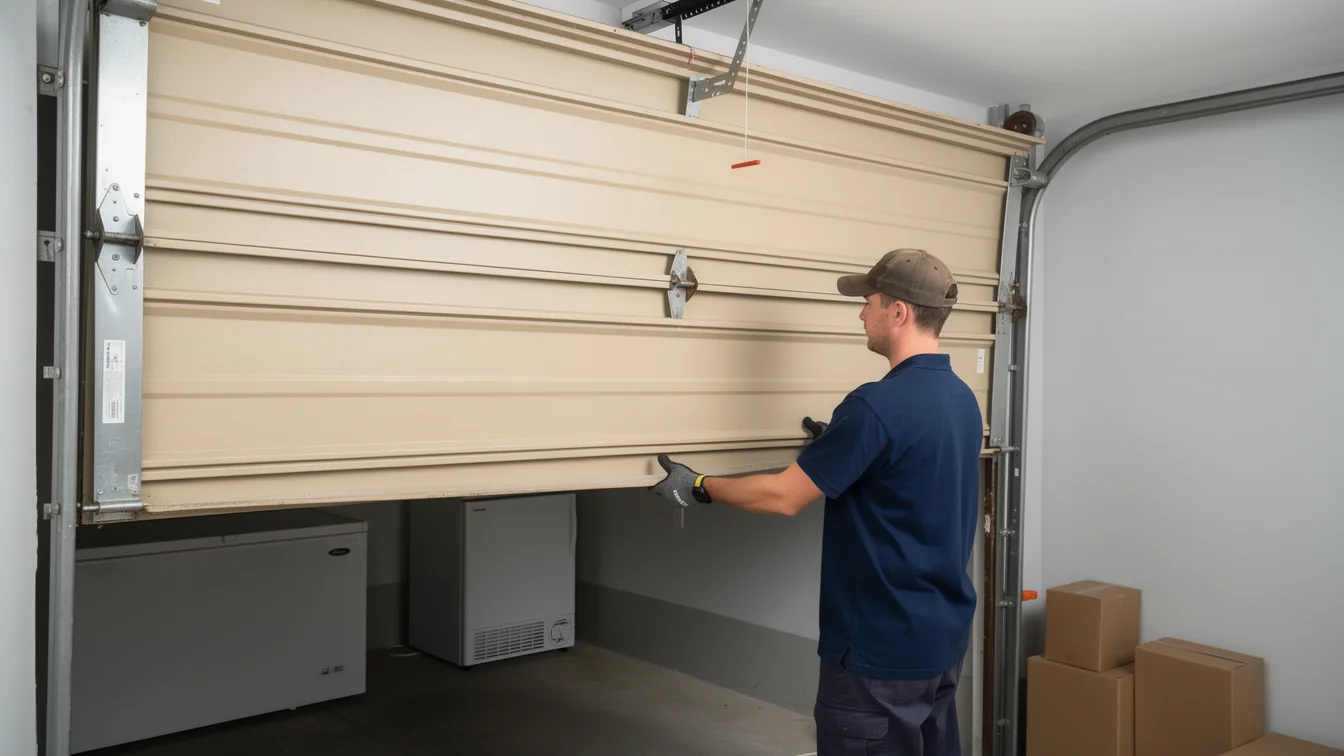
Before you call anyone, open the garage and look at three things. First, the springs above the door - on most Redwood City houses built in that 1947-1988 run, that's a torsion spring on a shaft over the opening, not the old extension-spring style stretched along the horizontal track. If you see a gap in the coil or one side sagging lower than the other, stop opening the door by hand. Second, the rollers. Steel rollers on original 1960s-era track wear a groove into the track itself over the decades; if the door rattles more than it used to, that groove is probably why. Third, the bottom seal. In a mild temperate climate like this one, seals don't crack from freeze-thaw the way they do inland, so if yours is brittle or torn, it's more likely just age than weather damage. Pull the release handle, lift the door by hand to waist height, and let go. It should hold. If it drops, the spring is doing less than it should, and that's not a DIY fix. None of this tells you exactly what's wrong - it tells you whether it's safe to keep using the door until someone looks at it.
What It Costs
I can't quote a number here without seeing the door, and anyone who does over the phone is guessing. What I can tell you is what drives the number up or down in this area. A lot of the housing stock in the 41 named communities around here dates to the 1960s and '70s, which means the hardware is often a size or style that's been discontinued - finding a matching bracket or drum takes longer than swapping a current part, and labor time is most of what you're paying for. The service area's median household income sits around $168,832, which is relevant mainly because it shapes what gets fixed versus replaced: a lot of owners here choose to replace an aging door outright rather than keep patching original 1960s hardware piece by piece, since the parts hunt on old track and drums can cost more in time than a new door costs in materials. If your opener or spring is original to a house built before the 1980s, repair is still usually the cheaper first move - replacement only makes sense once you're chasing a second or third failure on the same unit.
What Is Going On
Most garage door calls in this part of the Peninsula trace back to the same root cause: the house is older than the hardware was ever meant to last. With median construction around 1966 and most of the surrounding tract neighborhoods built out through the 1970s and '80s, a huge share of the doors a technician opens here are original sectional steel doors on side-mounted torsion springs, sized for openers that have long since been superseded. Cables fray where they've run over the same drum groove for fifty-plus years. Torsion springs lose coil tension gradually, so the door gets harder to lift months before it actually fails - owners usually notice the opener straining before they notice the spring. Track alignment drifts as houses settle, which on a home from the 1960s means decades of small shifts, not one dramatic event. None of this is dramatic damage. It's slow wear on hardware that was built to a different standard than what ships today, in houses that have had sixty-plus years to settle and shift around that hardware.
How Local Conditions Play In
The mild temperate band this area sits in actually works in a homeowner's favor compared to a lot of the country - no deep freeze cracking seals, no summer heat warping panels the way it can inland. What it doesn't spare you is salt air drift and coastal damp moving in from the bay side of the Peninsula, which shows up as surface rust on springs and hinges before it shows up anywhere else. That pattern repeats across nearby areas like San Carlos, Belmont, and Redwood Shores, all built out in roughly the same era and sitting in the same climate band - the failure points on a 1960s door in one of those towns look a lot like the failure points here. One honest limitation: if a part is genuinely obsolete - some of the original drum and bracket styles from this era are - I'm not going to pretend a universal replacement will match perfectly. Sometimes the right call is replacing the hardware set rather than hunting for an exact match that doesn't exist anymore.
Frequently asked questions
Is my garage door opener too old to repair?
If it's original to a house built before the 1980s, it may still be repairable, but parts for some original drum and bracket styles from that era are genuinely discontinued. A tech can tell you on the spot whether a part is still available or whether replacement makes more sense.
Why is my spring rusting if it doesn't freeze here?
Coastal damp and salt air drift do the work that freeze-thaw does elsewhere. In this mild climate band, surface rust on springs and hinges shows up before cracking or warping does, especially on hardware that's been in place since the 1960s or '70s.
Should I repair or replace an original 1960s door?
Depends on how many parts are failing. One worn spring or roller is usually a repair. If you're chasing a second or third failure on the same original hardware, replacement often costs less over time than continuing to hunt for obsolete parts.
Related garage door services in Redwood City
More garage door guides
Book garage door service in Redwood City
Call now or request a quote - tell us what the door is doing and where you are.